

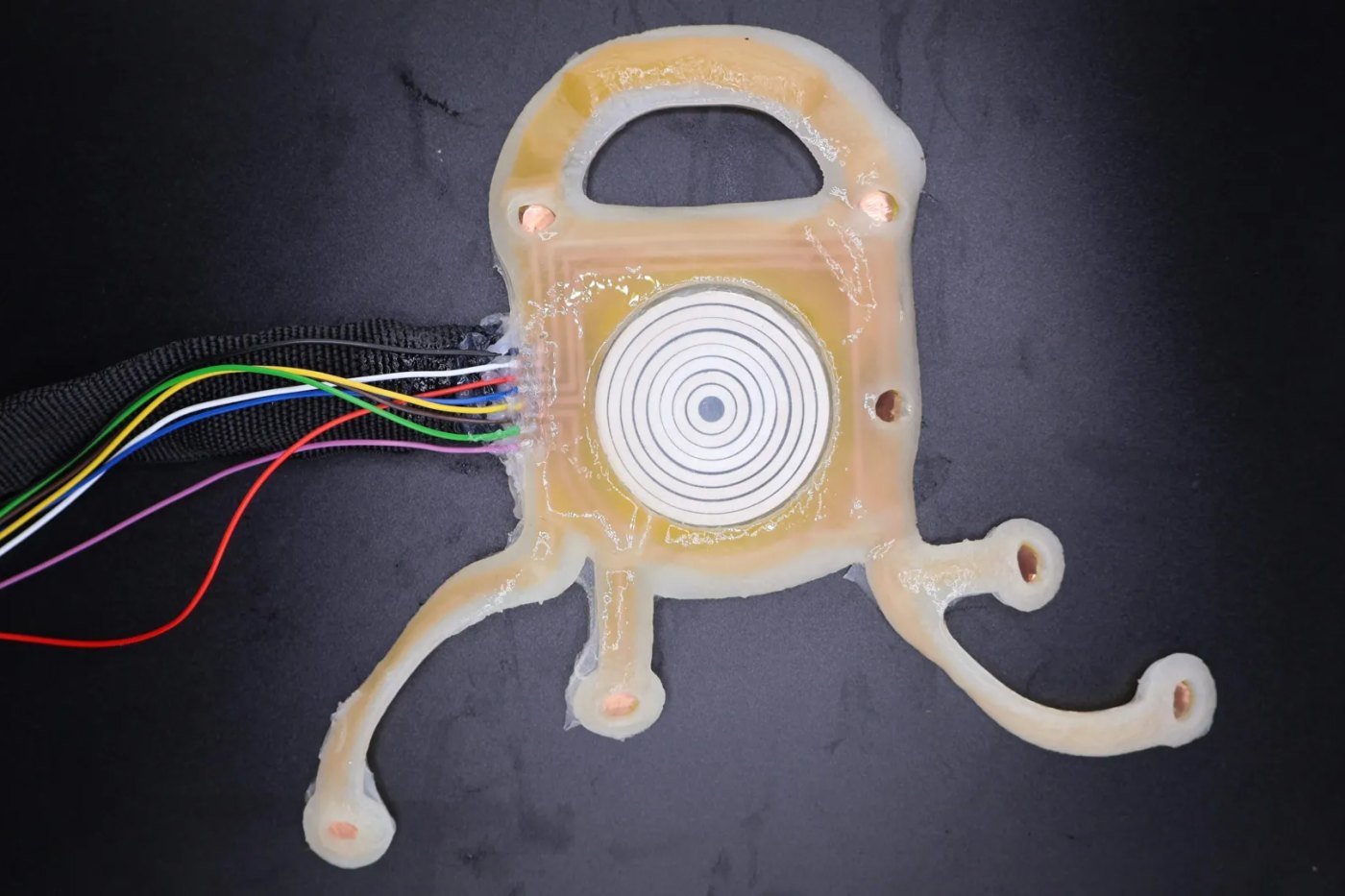
Dreaming may have just gained a gentle nudge from sound. Engineers and clinicians at the University of Texas have built a soft, skin-mounted patch that directs gentle ultrasound toward deep parts of the brain involved in sleep. In a small study, volunteers wearing it reached REM sleep, the dream-rich stage of the night, an average of 43 minutes sooner and lingered there about 16 minutes longer. No pills or surgery were involved. What makes the device unusual is that it does two jobs at once: it stimulates the brain and listens to it in real time.
Sound waves and a listening ear
The patch is called NEUSLeeP. It pairs ultrasound stimulation with electrodes that record brain activity as it happens. Ultrasound is sound energy at frequencies too high for people to hear. It can travel to regions below the brain's surface without any need to open the skull. That lets the team target areas that help regulate sleep while watching how the brain reacts.
"This is the first time we've been able to noninvasively target deep brain regions involved in REM sleep, while simultaneously monitoring brain activity," said Kai Wing "Kevin" Tang, who led the work. Tang recently earned a Ph.D. in biomedical engineering at the university. The project was supervised by Huiliang "Evan" Wang, an assistant professor of biomedical engineering in the Cockrell School of Engineering and the study's principal investigator. The findings are published in Nature Communications.
What happened in the study
REM stands for rapid eye movement. Most vivid dreams happen during this phase, and it also helps the brain process emotions, lock in memories and adjust to stress. Problems with REM sleep have been linked to several mental health conditions, which makes it an appealing target for new treatments.
The study included 28 participants. Both healthy sleepers and people with certain sleep difficulties showed the gains in REM timing and duration. Volunteers said the patch was comfortable, and adverse effects were minimal. Medicines act throughout the body, but the device is designed to focus its stimulation on specific brain regions.
Hints of calmer stress responses
The effects may reach beyond sleep itself. In healthy participants, the stimulation improved heart rate variability, which measures the natural changes in timing between one heartbeat and the next. This number offers a window into how the nervous system copes with stress and adapts to new conditions. Brain scans also revealed changes in circuits that handle emotion.
"REM sleep is not just about dreaming -- it's about emotional reset and stress adaptation," said Gregory Fonzo, an assistant professor of psychiatry and behavioral sciences at Dell Medical School and a co-principal investigator. "By enhancing REM, we may help people better cope with stress and improve their overall well-being."
That idea matters because disrupted REM sleep has been tied to anxiety, depression and post-traumatic stress disorder (PTSD). Today, sleep problems are usually treated with drugs or behavioral therapy. These can help, but medications may bring unwanted effects. Current treatments also do not always target the biology that underlies disturbed REM sleep. However, the researchers have not yet shown that the patch can ease symptoms of any mental health disorder.
Small study, bigger plans
With only 28 people taking part, the results are early. Larger trials are needed to see how reliably the patch works and whether its benefits last over time. The team plans those trials and wants to try the device in people living with chronic insomnia, depression or PTSD.
The researchers also imagine uses at home, from monitoring sleep to therapies tuned to each person's sleep patterns. They see it as well as a new research tool for studying how deep brain regions shape sleep. "Our vision is a future where patients with mental health disorders can optimize their sleep with a noninvasive and safe treatment," said Vincent Mysliwiec, a sleep disorders expert at UT Health San Antonio and co-principal investigator.
The team has filed a patent application. It is also exploring a path to market with Discovery to Impact, the university's office for commercializing research. Collaborators included researchers from the university's psychology department and from Virginia Tech's Fralin Biomedical Research Institute.
Sources: ScienceDaily; Nature Communications (original study). Image: Huiliang "Evan" Wang / University of Texas.


Comments
Please login to leave a comment Sign in