

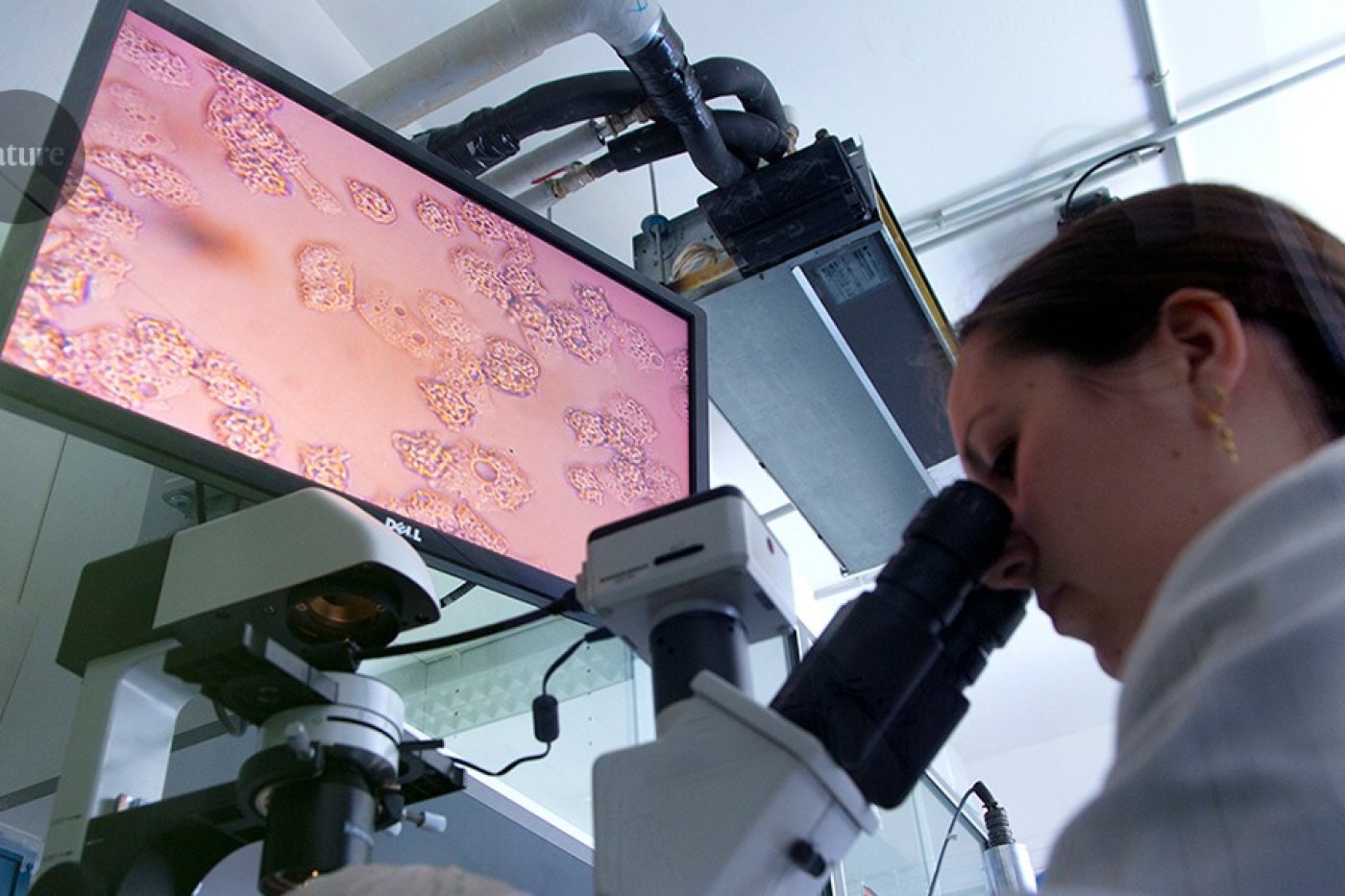
Some viruses are so large you can spot them under an ordinary light microscope. Until now, these giants were thought to live mostly out in the environment, infecting single-celled organisms. Now microbiologists report that a previously unknown group of them has been quietly living inside us: by one estimate, roughly 180 million people may be carrying these newly described ‘egoviruses’ in their intestines. The findings, published in Nature, hint at an answer to one of virology’s lingering puzzles — where poxviruses, the family behind smallpox and mpox, actually came from.
The odd one out among giant viruses
Large and giant viruses belong to a sprawling phylum called Nucleocytoviricota, DNA viruses that mostly infect single-celled organisms in the environment. Poxviruses sit oddly within this family tree, because they can infect humans and animals directly and nobody knows where they came from, according to Fasséli Coulibaly, a structural biologist at Monash University in Melbourne, Australia.
Egoviruses, he suggests, could be the bridge that has been missing: an evolutionary link between asfuviruses, giant viruses that infect microorganisms, and the disease-causing poxviruses.
Found by sifting through genetic haystacks
The discovery came not from a laboratory dish but from online libraries of metagenomes — bulk collections of genetic material gathered from a whole environment at once. Microbial ecologist Tom Delmont and his colleagues at the French National Centre for Scientific Research in Paris combed through those databases. Because metagenomes capture the DNA of every organism present, researchers can hunt for microbes that nobody has managed to cultivate.
The team searched for a single gene shared by most nucleocytoviruses. That search turned up the egoviruses, which stood out immediately: they are the only type of nucleocytovirus that is prevalent in the gut.
In people, pigs, goats and deer
Egovirus DNA showed up in gut samples from humans as well as buffalo, goats, chickens, deer and pigs. Six clades — branches of closely related viruses — were unique to people. One of those branches is thought to occur in about 1% of the world’s population, a figure based on the detection of at least one of two egovirus proteins in the samples analysed.
The spread is strikingly global. The researchers picked up these proteins in samples from the Hadza, a hunter-gatherer group in Tanzania, as well as from populations in Europe, the United States and South America. According to Delmont, that geographic reach suggests egoviruses have been inhabiting the human gut for a long time, rather than arriving recently.
“This is a really groundbreaking study,” says Subir Sarker, a molecular virologist at James Cook University in Townsville, Queensland. That these viruses turn up in many animal species, including people, and across the world shows giant viruses are more diverse than previously thought, he says.
Who do they actually infect?
A virus needs a host, and in the crowded ecosystem of the gut there are many candidates. To narrow down the possibilities, the team measured the genetic overlap between egoviruses and organisms that have a cell nucleus. The closest match was with single-celled microbes that help ruminants such as cows break down their food — a clue that these microbes, rather than human cells, may be the viruses’ hosts.
That possible host relationship also feeds into the broader evolutionary story. An accompanying research briefing published alongside the paper states the idea plainly in its title: poxviruses probably evolved in the digestive system of animals.
For now, the identification rests on genetic signatures pulled from databases rather than on viruses isolated and grown in the lab, and the reported findings do not link egoviruses to any illness. What the work does establish is that a major branch of the virus world has been hiding in plain sight, inside a place biologists have studied intensively for decades.
Sources: www.nature.com; Nature (original study). Image: Gabrielle Voinot / Eurelios / Look at Sciences / SPL.


Comments
Please login to leave a comment Sign in