

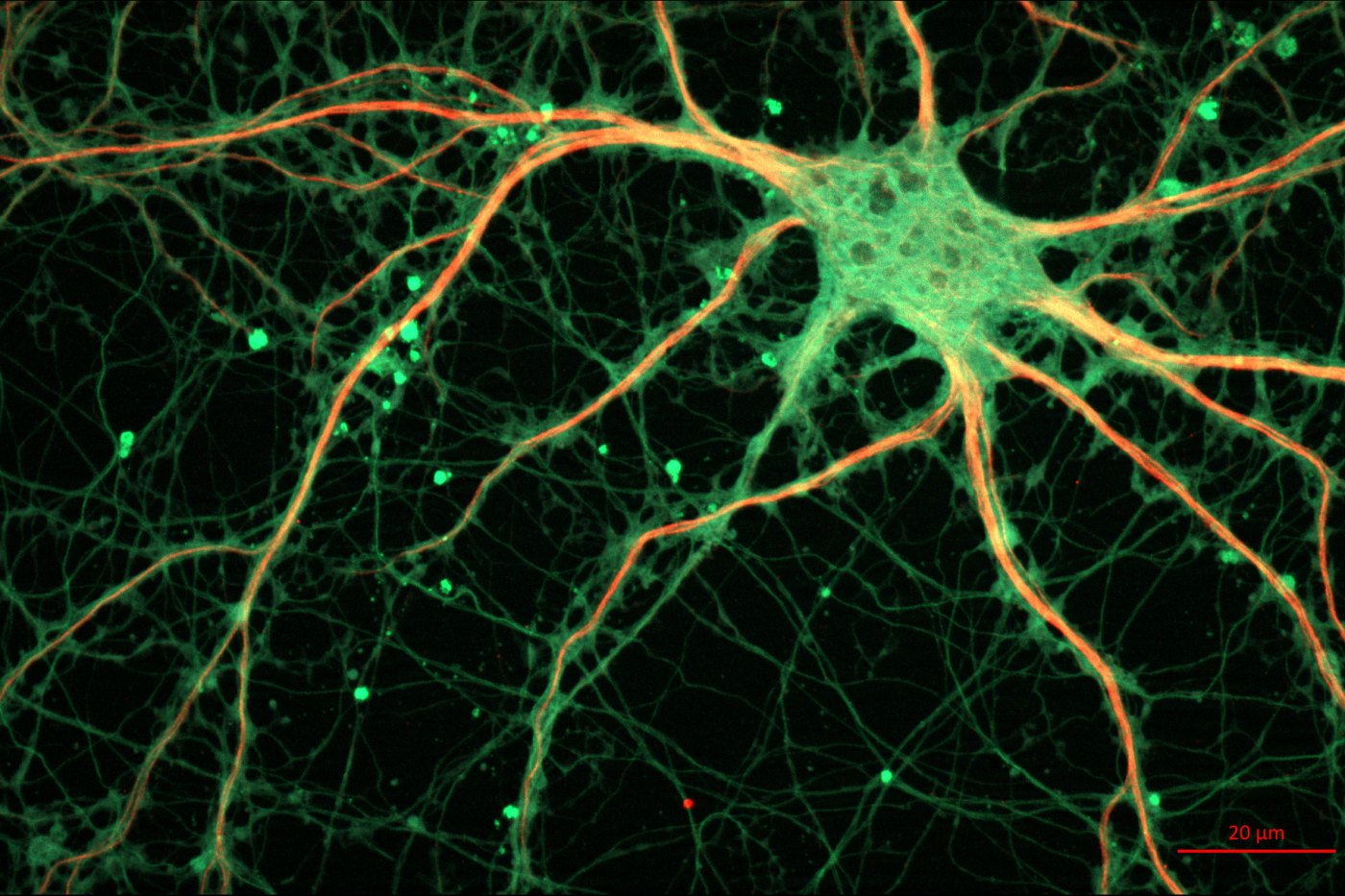
To earn a licence, a London taxi driver must pass a famously hard exam known as "the Knowledge": memorising tens of thousands of streets and landmarks and working out the best route between any two points without a map. Preparing for it usually takes several years. When the neuroscientist Eleanor Maguire and her colleagues scanned the brains of licensed drivers in 2000, they found that the back part of the hippocampus, a curved structure deep in the brain, was larger in the drivers than in people who did not drive taxis, and the longer someone had driven, the larger it tended to be. The finding hinted at something researchers had been uncovering for decades: the brain contains its own map, and its own way of reading it.
A map in the head
Philosophers have long wondered how we sense space. In the 18th century, Immanuel Kant argued that the idea of space is built into the mind rather than learned. In the 1940s, the American psychologist Edward Tolman watched rats in mazes and noticed that they did not simply memorise a chain of left and right turns. When the familiar route was blocked, they could find sensible shortcuts. Tolman proposed that the animals carried a cognitive map, an inner representation of their surroundings. But nobody knew what such a map would look like inside a brain.
Cells that know where you are
The first answer came from University College London. In 1971, John O'Keefe and his student Jonathan Dostrovsky recorded the electrical activity of single nerve cells in the hippocampus of rats moving freely around an enclosure. They found cells that became active only when the rat was in one particular spot. Another cell fired in a different spot, and so on, until together the cells covered the whole space. O'Keefe called them place cells.
Crucially, these cells were not simply responding to what the rat could see at that moment. They formed a stable map of the environment that the animal could recall later. When the rat was moved to a new room, the same cells reorganised into a completely different pattern, as if a fresh map had been drawn. The hippocampus seemed to store many maps, one for each familiar place. In 1978, O'Keefe and Lynn Nadel set out this idea in an influential book, The Hippocampus as a Cognitive Map. For years many scientists were sceptical, but the evidence steadily grew.
Grid cells: the brain's coordinate system
A map is more useful with coordinates. In 2005, May-Britt and Edvard Moser and their team at the Norwegian University of Science and Technology in Trondheim reported a remarkable discovery in the entorhinal cortex, a region next to the hippocampus that feeds it much of its information. Here, single cells fired not at one location but at many, and when the researchers marked those locations on a map of the enclosure, they formed a strikingly regular pattern of triangles that together make up hexagons, like a sheet of graph paper laid over the floor. They named these grid cells.
Different grid cells have grids of different sizes and positions, so that together they can pin down an animal's location precisely, even in darkness, by keeping track of its own movements. Other cells in the same network add more information: head-direction cells work like a compass and fire when the head points in a particular direction, while border cells respond to walls and edges. Together with the place cells of the hippocampus, they form what the Nobel committee described as an "inner GPS". In 2014, John O'Keefe, May-Britt Moser and Edvard Moser shared the Nobel Prize in Physiology or Medicine for discovering this positioning system.
The same system in people
Most of this work was done in rats and mice, but there is good evidence that humans have a similar system. Some people with severe epilepsy have electrodes temporarily placed in the brain to find where their seizures start. With their consent, researchers have asked some of these patients to play navigation games on a computer and recorded from their neurons. In 2003, a team led by Arne Ekstrom and Michael Kahana reported cells that responded to particular places in a virtual town, and later studies found grid-like activity in people too, including in brain scans of healthy volunteers.
The taxi study fits this picture. It suggested that intense, long-term practice at navigation is linked to changes in the structure of the human hippocampus. Because the study compared groups at one point in time, it could not prove cause and effect on its own, although the link with years of driving supported the idea that the brain had adapted.
Getting lost and Alzheimer's disease
The brain's positioning system has an important medical side. In Alzheimer's disease, the most common cause of dementia, the entorhinal cortex and hippocampus are among the first areas to be damaged. This helps explain why getting lost, even in familiar surroundings, can be one of the early signs of the disease.
In 2015, a German team led by Lukas Kunz and Nikolai Axmacher studied young adults, in their twenties, who carried a gene variant called APOE ε4, which raises the risk of developing Alzheimer's later in life. While these volunteers navigated a virtual arena inside a brain scanner, their grid-cell-like signals in the entorhinal cortex were weaker than those of people without the variant, decades before any symptoms could be expected. This does not mean that a navigation test can diagnose Alzheimer's today, but it raises the hope that changes in the brain's map could one day help detect the disease very early.
More than a map
Many questions remain. Scientists are still working out exactly how grid cells produce their regular pattern and how the brain combines signals from movement, vision and other senses into one reliable sense of position. The hippocampus is also central to memory for events, and researchers are exploring whether the same mapping machinery helps us organise memories and even abstract ideas, not only physical space. Whether relying heavily on smartphone navigation changes these circuits in the long run is not yet known. What is clear is that each time you find your way home, a network of cells deep in your brain is quietly drawing and reading a map.
Sources: Nobel Prize in Physiology or Medicine 2014: press release (O'Keefe, May-Britt Moser and Edvard I. Moser); Brain Research (1971), O'Keefe and Dostrovsky: The hippocampus as a spatial map. Preliminary evidence from unit activity in the freely-moving rat; Nature (2005), Hafting, Fyhn, Molden, Moser and Moser: Microstructure of a spatial map in the entorhinal cortex; PNAS (2000), Maguire et al.: Navigation-related structural change in the hippocampi of taxi drivers; Science (2015), Kunz et al.: Reduced grid-cell-like representations in adults at genetic risk for Alzheimer's disease. Image: ZEISS Microscopy / Wikimedia Commons (CC BY 2.0).


Comments
Please login to leave a comment Sign in