

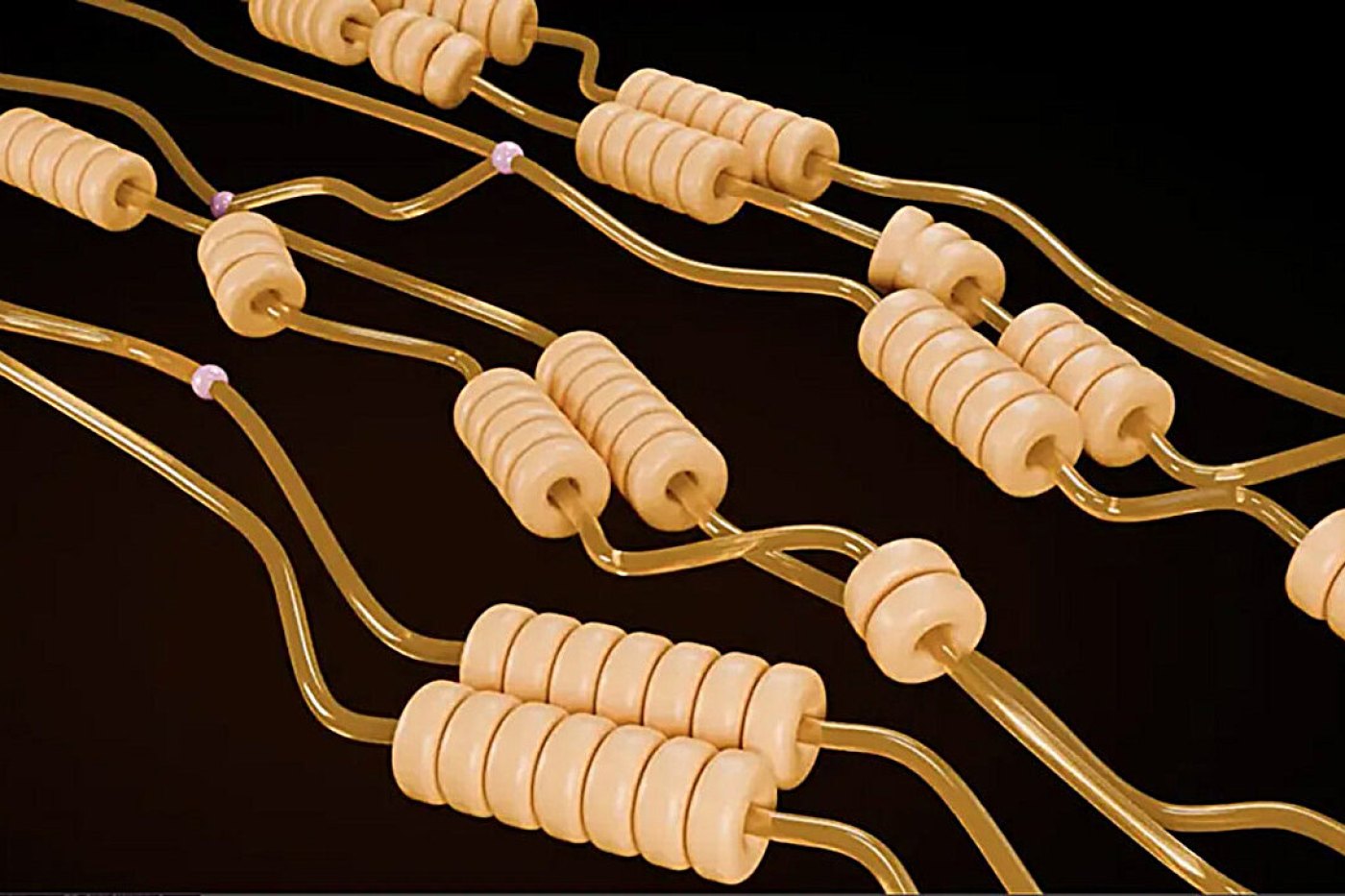
Bend a paperclip back and forth enough times and it snaps. Most materials behave this way, slowly weakening under repeated use. Now chemists at Washington University in St. Louis have built a soft, water-loving material that does the opposite. When it is bent or stretched, it reorganizes and grows stronger, and only in the spots where the strain falls. The gel is made from a biodegradable blend of sugar and polyethylene glycol, and it can be shaped with a 3D printer. The work is published in Nature Materials.
A gel that learns from stress
The team was led by Chenfeng Ke, a professor of chemistry in Arts & Sciences at the university. Postdoctoral researcher Dan Zheng is the paper's first author, and graduate students Yufei Chen and Mingliang Bai also contributed. The group created a hydrogel, a flexible material that can soak up and hold large amounts of water. Its ingredients are sugar crystals and polyethylene glycol, a compound often found in laxatives and other health products. The material has been patented.
"Our smart material actually gets stronger the more it's bent and strained," Ke said. "It has properties we have never seen before. It can remember, adapt, learn and grow."
Rings that slide into place
The key ingredient is cyclodextrin, a sugar-based compound whose molecules form tiny rings. When the material is stretched or bent, these rings slide into position and brace the regions under strain. The paper's title describes the material as forming "adapt-ring networks."
"These moving rings are critical to the structural design," Ke said.
To test the idea, the team applied the gel to a flexible joint shaped like a knee. "We bent it 10,000 times, and the material performed just as we predicted," Ke said. "The polymers in the hydrogel become more uniform and organized, making it stronger in exactly the places where the strain is happening."
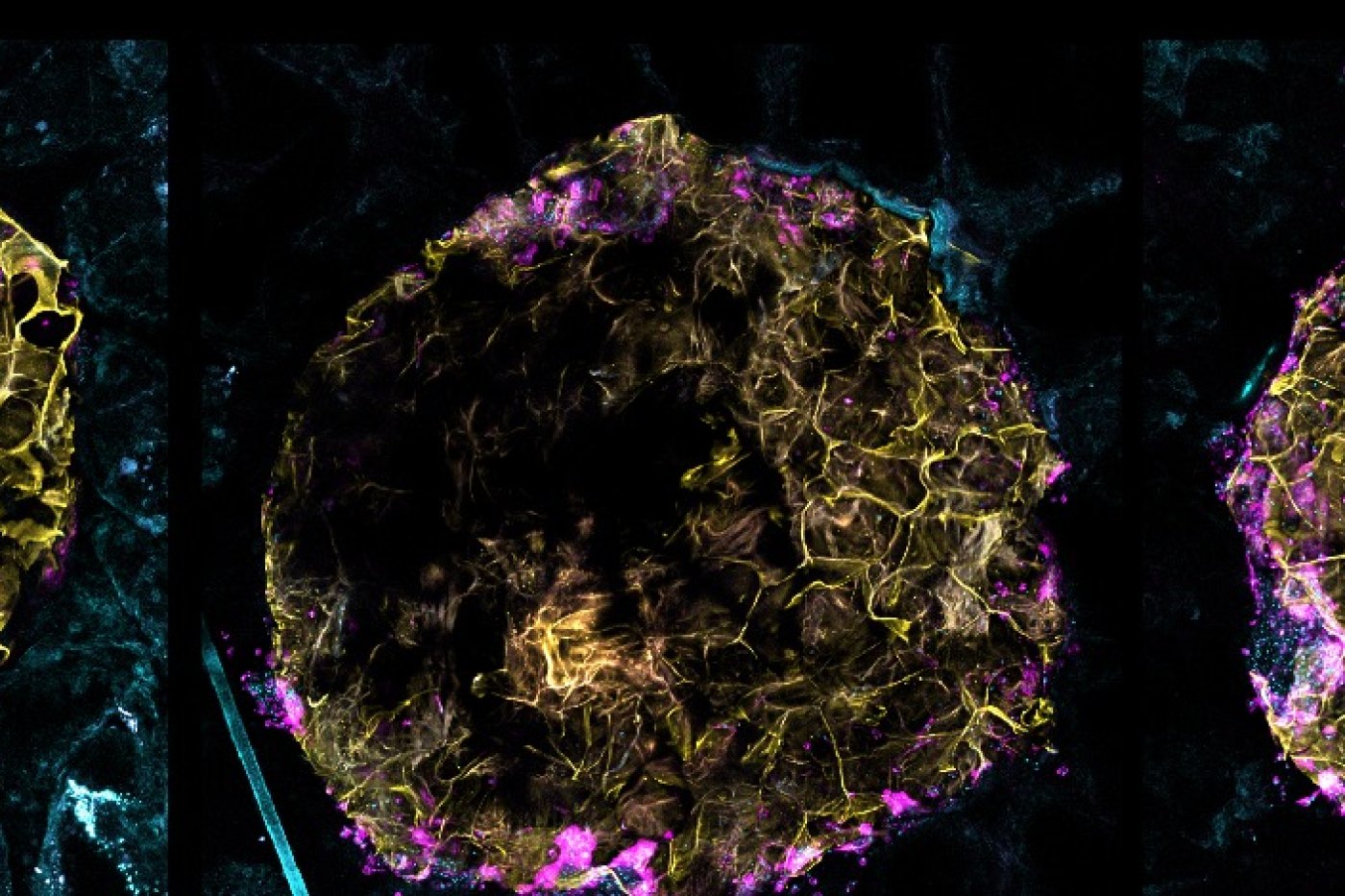
The researchers took inspiration from the body itself. In many ways the gel resembles biological materials such as collagen, a protein that gives skin its strength and stretch. "Some of the most impressive smart materials are found in biology," Ke said. "We used nature for inspiration."
Possible uses in medicine
Ke thinks the material could help protect and repair the body. "Because it's made of sugar and polyethylene glycol, it's completely compatible with biological tissues," he said. It might, for example, help support artificial joints or patch damaged tissue. In both cases, the parts of the gel that face little stress would stay soft and bendy, while stressed areas would firm up.
"If you're putting material into a body, you don't necessarily want it to be completely rigid," Ke said. "The material gets stronger only where it's needed." He expects the gel to attract interest from surgeons and orthopedic device companies.
Early days and next steps
For now, these medical uses are ideas rather than tested treatments. Ke notes that his background is in chemistry, not orthopedics or medical device design, and that specialists in other fields may see uses he has missed. He hopes to work with researchers at WashU Medicine and elsewhere to explore what the material can do, and to attract the attention of potential investors.
So far, the lab has made the gel only in small batches of a few tens of grams. Now that the concept has been shown to work, the team believes production could be scaled up. The project is part of Ke's wider effort to design materials inspired by nature. In April 2025, that effort included a pitch for a new generation of smart fabrics. "We've shown it's possible to produce smart materials with a 3D printer and the right chemistry," he said.
Sources: Phys.org; Nature Materials (original study). Image: Ke lab / Washington University in St. Louis.
Comments
Please login to leave a comment Sign in