


A man paralyzed by ALS has used a brain implant at home for nearly two years with no researchers present, turning attempted speech into almost 2 million words and keeping a full-time job.
Brain-computer interfaces have decoded speech accurately in labs before, but they needed experts on hand to run them. This is the clearest sign yet that one can work as an everyday tool.
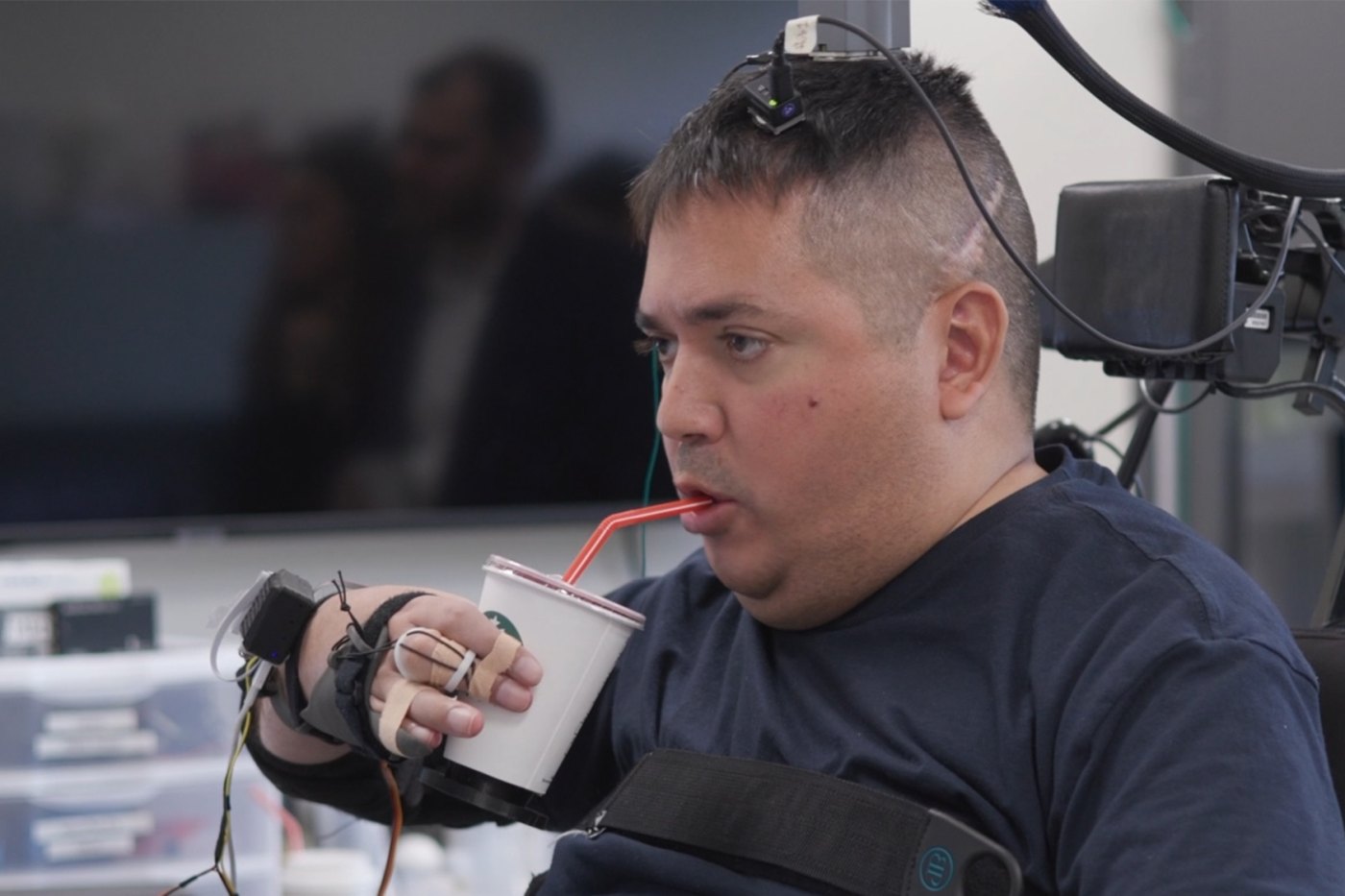
Casey Harrell, 47, has ALS, which has weakened his limbs and left his speech very hard to understand. In 2023, UC Davis neurosurgeon David Brandman placed four tiny electrode arrays, with 256 electrodes in all, in the part of his brain that coordinates speech. An earlier study showed the system could decode his words with 97% accuracy, but only when someone from the team set it up.
The new work, published in Nature Medicine on 15 June, describes upgraded software that Harrell runs on his own. Over almost two years he used it for more than 3,800 hours, producing 183,060 sentences at an average of 56 words per minute. He judged 92% of the sentences to be at least mostly correct, and in formal tests with a 125,000-word vocabulary the system topped 99% word accuracy. A second decoder turns his intended hand movements into cursor control, so he sends emails and texts and browses the web himself.
Harrell talks through the device whenever he likes. "Sometimes, he would do that over 12 straight hours," says Nicholas Card, a postdoctoral scholar at UC Davis and the study's lead author.
The results come from one person in the BrainGate2 trial, and the device remains investigational. It connects through wires that pass through the skin, care partners must set it up each day, and the bulky multi-computer rig keeps it inside Harrell's home, limitations the authors themselves list.
The team, which worked with Brown University and Mass General Brigham, says the 3,800 hours of recordings form the largest single-person brain dataset at the resolution of individual neurons. BrainGate2 is still enrolling participants.
Sources: UC Davis Health; Nature Medicine (original study). Image: UC Davis Health.

Comments
Please login to leave a comment Sign in